Sage Barista Express Review: Grinder and Espresso Combined
Our take on the Sage Barista Express: an integrated grinder, a 54 mm portafilter and a proper manual workflow — plus where it frustrates new owners.
What the Sage Barista Express actually is
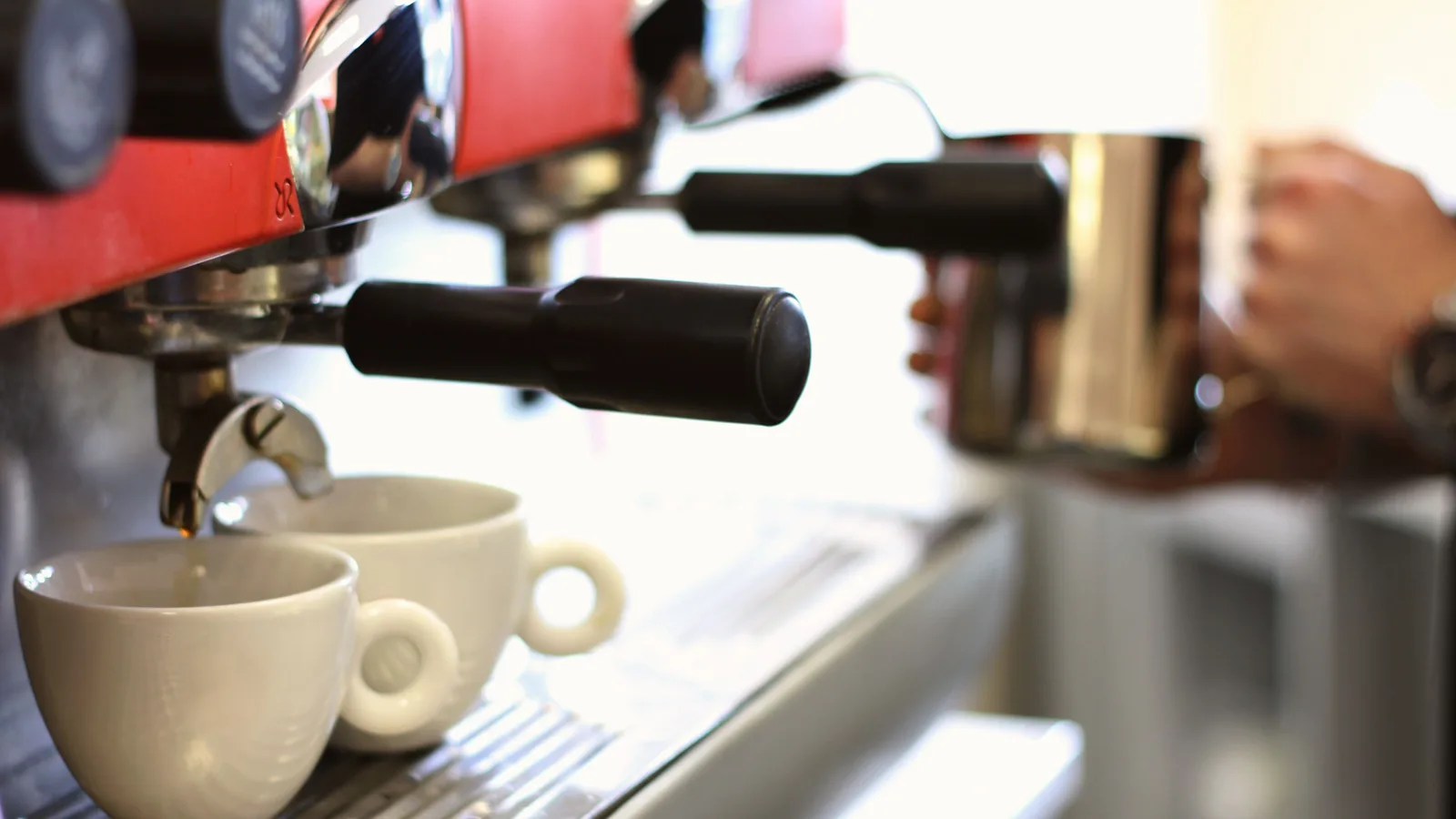
The Sage Barista Express is an all-in-one manual espresso machine. A conical burr grinder and bean hopper sit directly above a cradle that holds the portafilter, so you grind straight into the basket, tamp, lock the handle into the group head and pull the shot yourself. Beyond programmable shot volume, nothing is done for you: you own the grind, the dose and the tamp, while the machine handles pressure and brew temperature.
That combination is the entire pitch. Most machines in this part of the market either grind badly or don't grind at all, and the standard advice to anyone starting out is to budget for a separate grinder as well. The Barista Express folds both into one footprint and one plug socket.
It is for the drinker who wants to learn espresso properly at home — who will weigh a dose, nudge the grind a step finer when a shot runs fast, and accept that the first fortnight produces a few sink shots. It is not for anyone who wants to press one button before a 7am meeting. A bean-to-cup automatic does that better and teaches you nothing.
- Machine type
- Manual espresso machine with an integrated conical burr grinder
- Portafilter
- 54 mm, with single and double baskets supplied
- Filter baskets
- Single-wall baskets for freshly ground coffee, plus dual-wall pressurised baskets
- Boiler
- Single, so brewing and steaming happen in sequence, not together
- Milk
- Manual steam wand — no automatic frother
- Controls
- Physical dials and buttons, a pressure gauge, programmable shot volume with manual override
- In the box
- Tamper, dose trimming tool and both basket types
Our verdict
Judge it as a first proper espresso setup, not as a luxury appliance, and it makes complete sense. Judge it as a convenience machine and it will disappoint you within a week.
Strengths and weaknesses at a glance
What it does well
- Grinder and espresso machine in one footprint — no second purchase, no second socket
- Real grind adjustability, so you can chase a better shot rather than accept what you're given
- The manual steam wand is capable of genuinely glossy microfoam once your technique settles
- Pressurised baskets mean it still functions with pre-ground coffee or beans past their best
- Physical controls and a pressure gauge make faults diagnosable instead of mysterious
Where it falls down
- Single boiler: brew, wait, steam. The second milk drink always takes longer than you think
- The first fortnight is fiddly while grind, dose and tamp all need sorting at once
- The built-in grinder is good for the money but less consistent than a dedicated grinder at a similar outlay
- It needs headroom — the hopper sits on top and there's no way around that
- It rewards fresh beans and punishes cheap ones, which is an ongoing cost, not a one-off
How it scores on the things that matter
- Grind quality and adjustability
- 4.0/5
Steps are close enough together to dial in espresso properly; fine at the price, though a standalone grinder costing the same would be more consistent.
- Ease of use for a beginner
- 3.5/5
Nothing is hidden, but you do the work: dose, tamp, lock, watch the gauge, adjust. Budget a couple of weeks of practice.
- Milk texturing
- 4.0/5
The wand can produce proper microfoam. It is entirely manual, so the result tracks your technique rather than the machine.
- Speed for two drinks
- 2.5/5
Brew, purge, steam, then start again for the second cup. Perfectly pleasant at the weekend, tedious on a weekday.
- Build and everyday durability
- 3.5/5
Solid where it counts and plasticky in places; regular backflushing and descaling matter more than the badge on the front.
- Value as a package
- 4.5/5
Grinder, machine, both basket types, tamper and dose tool in one box is hard to beat if you're starting from nothing.
The grinder is the reason to buy it
Strip away everything else and the Barista Express is a decent burr grinder with an espresso machine bolted underneath. That matters, because grind quality is where most home espresso goes wrong: a machine can only extract what the grinder gives it.
The adjustment is stepped rather than stepless, and the steps are fine enough to move a shot from gushing to dripping without overshooting wildly. You grind directly into the basket held in the cradle, which keeps the workflow tidy and removes the funnel-and-spill routine that separate grinders inflict on you.
The honest limitation is consistency. It will produce excellent espresso with fresh beans, and it will drift a little as the hopper empties or the burrs warm up. If you are the sort of person who will eventually want a dedicated grinder anyway, buy the machine you actually want now rather than paying twice.
Milk, steam and the single-boiler rhythm
The steam wand is a proper one — no plastic auto-frother, no jug with a whisk inside. It takes a few attempts to find the sweet spot where the tip sits just under the surface and you hear a quiet tearing sound rather than a roar. Once you find it, the foam is good enough for flat whites and cortados.
The constraint is the single boiler. The machine brews at one temperature and steams at another, so it cannot do both at once. A single milk drink is fine. Two requires brewing both shots, then purging the wand, waiting for the steam to build, and steaming in two batches — which is exactly why this machine suits people who drink one or two coffees rather than a household making rounds.
If your day is mostly large cappuccinos in a hurry, this is the wrong machine and you already know it.
Where it will test your patience
The frustrations are consistent and worth knowing before you buy:
- The learning curve is front-loaded. Grind, dose, distribution and tamp all affect the shot, and at the start you won't know which one is wrong.
- Stale beans expose it. Supermarket beans a month past roasting produce thin, gushing shots no amount of adjustment will fix. This machine makes fresh beans a running cost.
- It takes up real space. It is tall, it is deep, and the hopper needs clearance above it for filling.
- Cleaning is a routine, not an occasional job. Knock out the puck, rinse the basket, purge the wand — daily. Backflush and descale on schedule or the coffee suffers quietly.
- It is not fast. If you are timing your morning, this will not be the appliance that saves you minutes.
Who should buy it, and who should walk away
Buy it if you are moving on from a capsule machine or a cafetière and want to understand why espresso tastes the way it does. It is also the right buy for a household of one or two where the coffee is made properly rather than constantly.
Buy it if you like the ritual — the weighing, the tamping, the small daily adjustments. Plenty of owners never upgrade because the process is the point.
Walk away if convenience is the priority. A bean-to-cup automatic grinds, doses and brews at the push of a button and cleans itself; it costs more and teaches you less, but it will not be abandoned by February. Also walk away if you drink four milky coffees a day, if the machine has to live under a wall cupboard, or if you have no intention of buying fresh beans.
Buying advice before you commit
- Measure the space first. Depth, width and — most often forgotten — the clearance above for filling the hopper and lifting it off.
- Check exactly what is in the box for the version you are buying. Basket types and included accessories vary between bundles and retailers, so confirm rather than assume.
- Budget for beans, not just hardware. A subscription or a local roaster will do more for your coffee than any accessory.
- Add the small extras. A knock box, a scales that fits under the group head, a milk jug and a microfibre cloth turn a frustrating machine into a pleasant one.
- Buy from a retailer with proper after-sales support. Espresso machines need servicing eventually; a good returns process matters more than a small saving.
- Be honest about your mornings. If you know you will not tamp at 6.45am, spend the money on an automatic instead.
Dialling it in during the first week
-
01 /
Start with fresh beans and a full hopper
Freshly roasted beans, a week or two off roast, behave predictably. Fill the hopper properly and don't top up with old beans — you'll be adjusting the grind to compensate for staleness instead of learning.
-
02 /
Begin coarser than you think you need
Set the grind coarse, pull a shot, and work finer in single steps. Starting too fine means blocked baskets and frustrating, dribbling shots with no obvious cause.
-
03 /
Lock the dose before touching anything else
Use the same weight in the basket every time. Once dose is stable, any change in the shot is down to the grind — which is the variable you actually want to be adjusting.
-
04 /
Watch the gauge and the flow, not the clock
A shot that gushes and blondes early is under-extracted: go finer. A shot that drips and stalls is over-extracted: go coarser. The pressure gauge and the colour of the stream tell you more than a timer at this stage.
-
05 /
Set the shot volume last
Once the grind is close and the shot tastes balanced, programme the volume button to stop where you want it. Then leave it alone and adjust only the grind as the beans age.
Frequently asked questions
Do I still need to buy a separate grinder?
Not for espresso. The built-in burr grinder handles the full range from fine espresso to coarser. You would only need a second grinder if you also wanted to grind for filter, cafetière or a different brew method.
Can it brew a shot and steam milk at the same time?
No. It has a single boiler, so it brews at one temperature and steams at another. You pull the shot first, then switch to steam, which adds a minute or two to every milk drink.
Will it work with pre-ground coffee?
Yes, using the dual-wall pressurised baskets, which create resistance artificially. The result is drinkable rather than memorable, so treat it as a backup for when you run out of beans.
How much clearance does it need above the worktop?
Enough to lift the hopper off and fill it without tipping it against a cupboard. Measure the machine's height plus the hopper, then check against the gap under your wall units before ordering.
Is it a good choice for a shared house or office?
Less so. It suits one or two people who will learn its quirks. In a busy kitchen, different users, inconsistent doses and the single-boiler wait times all work against it.