De'Longhi Dedica Review: Compact Espresso, Real Trade-offs
Our De'Longhi Dedica review weighs espresso quality, milk frothing and footprint to help you decide if this compact machine suits your kitchen.
What the De'Longhi Dedica is and who it's for
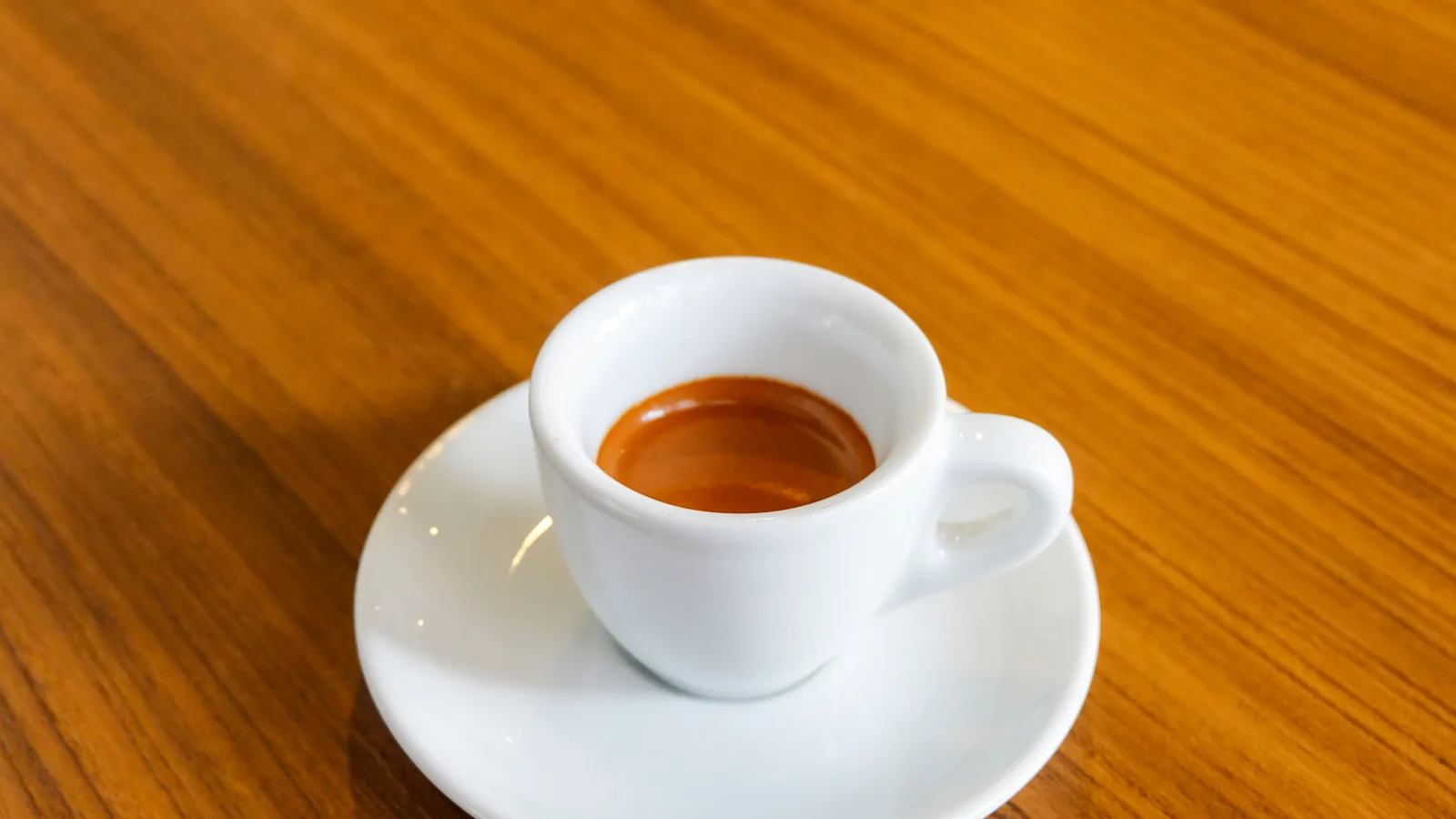
The De'Longhi Dedica is a manual espresso machine built for kitchens where worktop space is the deciding factor. Rather than the wide, boxy footprint of most pump machines, it stands roughly 30 cm tall and about 15 cm wide, so it slips under wall units or into the gap beside a fridge. You dose ground coffee into a 51 mm portafilter, tamp it yourself and press a button — there's no bean hopper, no grinder and no drink menu.
Inside, a thermoblock rather than a boiler does the heating, which is what allows the slim body and the quick warm-up. De'Longhi pairs it with a 15-bar pump and a 1.1-litre water tank that lifts out for filling. The machine takes ground coffee in the supplied baskets and also accepts ESE paper pods, which is genuinely useful on mornings when you can't be bothered with the tamping ritual.
Two versions matter when you're shopping. The standard Dedica — sold over the years as the EC680 and EC685 — has a covered milk wand with a panarello sleeve. The Dedica Arte, the EC785, replaces it with an exposed steam wand. That single difference changes what the machine is good at, and it's the thing worth deciding on before anything else.
- Type
- Manual pump espresso machine
- Width
- About 15 cm — among the narrowest in its class
- Height
- About 30 cm
- Water tank
- 1.1 litres, removable
- Pump pressure
- 15 bar
- Portafilter
- 51 mm, pressurised baskets supplied
- Heating
- Thermoblock
- Coffee
- Ground coffee or ESE pods
Our verdict on the Dedica
The Dedica earns its popularity. For the money it produces a genuine espresso — body, crema, the sharp little hit you don't get from a pod — from something small enough to pick up with one hand, and the brushed-metal finish reads as premium on a worktop.
But the praise comes with conditions. The pressurised baskets are designed to flatter coffee that isn't fresh, which is generous of them and also the ceiling on quality. The covered wand makes foam in seconds and microfoam only by accident. And 51 mm baskets, tampers and distribution tools sit on the thin end of the accessory market. Accept those terms and it's excellent value; fight them and you'll be shopping again within a year.
Strengths and weaknesses at a glance
What it does well
- Very small footprint — roughly 15 cm wide, so it fits kitchens where most espresso machines simply won't.
- Heats up quickly thanks to the thermoblock; you aren't waiting minutes for a boiler to come to pressure.
- Forgiving with pre-ground supermarket coffee, and it takes ESE pods when speed matters more than ceremony.
- Three physical buttons, no menus, no app pairing, nothing to configure before your first shot.
- Costs a fraction of a heat-exchanger machine and is smart enough to leave on the worktop.
Where it falls short
- Pressurised baskets limit how good the espresso can get, however good your coffee is.
- The covered panarello wand makes bubbly foam rather than the tight microfoam latte art needs.
- 51 mm accessories are a smaller, pricier market than the 58 mm world.
- Plastic parts sit alongside the metal finish, and the body doesn't feel as solid as it looks.
- No grinder, no shot timer, no guidance — the results are entirely down to your technique.
How the Dedica scores on what matters
- Espresso quality
- 3.5/5
Proper espresso with crema, but the pressurised basket flattens flavour compared with a non-pressurised setup.
- Milk frothing
- 3.0/5
Fast, generous foam for cappuccino; poor control for microfoam. The Arte's exposed wand scores a point higher.
- Ease of use
- 4.0/5
Three buttons and a simple routine. Nothing to learn except the dosing and tamp, which is where beginners struggle.
- Footprint and design
- 5.0/5
The reason to buy it. Slim, quiet-looking and easy to tuck away in a small kitchen.
- Build and cleaning
- 3.5/5
Wipe-down is quick and the tank lifts out, but there's more plastic than the finish implies and the drip tray needs emptying often.
- Value for money
- 4.0/5
Cheap for a manual machine that makes real espresso — provided you budget for a grinder as well.
Espresso quality: what the 51 mm basket really delivers
The Dedica uses a 51 mm portafilter with pressurised baskets. A pressurised basket has a single small hole and a spring valve inside, which artificially builds the resistance that a proper grind would normally create. The upside is that it will produce something drinkable from coffee ground for a cafetière or bought ready-ground at the supermarket. The downside is that the flavour gets flattened: you lose the clarity and sweetness that a well-extracted shot can have.
Many owners eventually buy a non-pressurised 51 mm basket and a bottomless portafilter. That's a real improvement, but it only works if you also own a grinder good enough to dial in — otherwise the shots gush or choke. It's a step up in cost and effort, not a cheap trick.
With fresh beans, a decent grinder and consistent tamping, the Dedica pulls shots that would pass in plenty of cafés. Without them, it's a convenient way to make strong coffee. Both are fine outcomes; just be honest about which one you're buying.
Milk frothing: panarello versus the Arte's steam wand
On standard Dedica models the steam wand is wrapped in a panarello — a sleeve with air holes that draws in and agitates milk. It's fast, it's hard to get wrong, and it makes the sort of dry, airy foam that sits on a cappuccino. It's not suited to the glossy, paint-like microfoam needed to pour a rosetta, and you'll get large bubbles unless you work the jug hard afterwards.
The Dedica Arte swaps that sleeve for an exposed wand. It asks more of you — you position the tip, control the air and stretch the milk yourself — but the ceiling is much higher, and flat whites and lattes become achievable with practice.
If milk is a small part of your day, the standard model is fine. If you drink two flat whites before 9 a.m., it's worth paying for the Arte.
| Feature | Dedica (standard) | Dedica Arte |
|---|---|---|
| Steam wand | Covered panarello sleeve | Exposed, professional-style wand |
| Milk texture | Quick, airy foam with larger bubbles | Tighter microfoam once you've practised |
| Latte art | Difficult to pour anything recognisable | Achievable with technique |
| Learning curve | Almost none | A few jugs of milk and some patience |
| Best for | Black coffee drinkers who froth occasionally | Flat white and latte drinkers |
Day-to-day life: footprint, tank and cleaning
Living with a Dedica is mostly pleasant. It warms up quickly, so a mid-afternoon shot doesn't require forward planning, and the narrow body means it never dominates the worktop. The tank holds enough for a few rounds of drinks before it needs refilling, and it lifts off to carry to the tap.
The niggles are small but persistent. The drip tray is shallow and fills faster than you expect. There's no cup-warming plate worth the name, so your first shot goes into a cold cup unless you rinse it under the hot tap. And the plastic housing means a careless knock against a mug leaves a mark.
Cleaning is straightforward: knock out the puck, rinse the basket, wipe the wand immediately after steaming and run a water-only shot now and then. Descaling is the job that actually matters — how often depends on your water hardness, so follow the machine's own indicator rather than a fixed calendar.
-
01 /
Fill and switch on
Lift the tank out, fill it with fresh cold water and clip it back. Press the power button and let the machine come up to temperature — the light stops flashing when it's ready.
-
02 /
Flush the group
Run a short shot of water with no coffee in the basket. This heats the portafilter and cup and clears anything sitting in the group from the last session.
-
03 /
Dose, level and tamp
Fill the basket, level the surface with your finger or a distribution tool, then tamp flat with firm, even pressure. Consistency matters far more than brute force.
-
04 /
Pull the shot
Lock the portafilter in and press the coffee button. Watch the flow: a thin, fast, blond stream means the grind is too coarse or the dose too small; a slow drip means the opposite.
-
05 /
Steam the milk, then purge
Steam first or coffee first, whichever suits your routine — but run a burst of steam through the wand afterwards to clear the holes before you wipe it.
-
06 /
Clean up
Knock the puck into the bin, rinse the basket and portafilter under the tap, and empty the drip tray before it overflows.
Buying advice before you order
Decide on the steam wand first. If you drink milk drinks regularly, the Arte's exposed wand is the version to buy; buying the standard model to save money and then finding the foam disappointing is the most common regret among owners.
Budget for a grinder as part of the purchase, not as a later treat. A manual machine with pre-ground coffee is a compromise you can live with, but a burr grinder unlocks what the Dedica can actually do. A cheap blade grinder won't get you there.
Check what's in the box. The supplied accessories are basic — plastic tamper, scoop, pressurised baskets — and most owners end up buying a metal tamper and a proper milk jug within a month. Factor that in.
Finally, buy from a retailer with clear returns and warranty terms, and keep the receipt. Espresso machines are the sort of appliance where a fault shows up in the first few weeks.
Who should buy it, and who should walk away
Buy the Dedica if you live in a flat with a worktop the width of a tea towel, drink espresso or Americanos most days, and want something that looks like a proper machine rather than a plastic pod dispenser. It's also a good first manual machine: the pressurised baskets tolerate mediocre coffee while you learn what tamping and dosing actually do.
Buy the Arte instead if milk is the point. The exposed wand is the difference between foam and microfoam, and it costs far less than moving up to a heat-exchanger machine.
Walk away if you already own a good grinder and want to explore lighter roasts and precise extraction — the pressurised basket and small diameter will frustrate you, and you'd be better served saving for a 58 mm machine. Walk away too if you want one-button drinks, if you mostly use a cafetière, or if you'd rather not think about grind size at 7 a.m. The Dedica rewards attention; it doesn't remove the work.
Frequently asked questions
Can the De'Longhi Dedica use ready-ground coffee?
Yes. The pressurised baskets are designed to work with pre-ground coffee, including supermarket bags, so you can use the machine without a grinder. Results improve noticeably with freshly ground beans, but the machine will still produce a drinkable shot without them.
Does the Dedica come with a coffee grinder?
No. It's an espresso machine only. You'll need to buy a separate grinder or use pre-ground coffee, and a burr grinder is the upgrade that makes the biggest difference to what ends up in the cup.
What's the difference between the Dedica and the Dedica Arte?
Mainly the steam wand. Standard models cover the wand in a panarello sleeve that makes quick, airy foam, while the Arte has an exposed wand that lets you texture milk properly for flat whites and latte art. The espresso side of the machine is broadly the same.
Is a 51 mm portafilter a problem?
Not for making coffee, but it narrows your options. Baskets, tampers and distribution tools in 51 mm exist, they're just less common and often more expensive than the 58 mm equivalents, so check availability if you plan to upgrade the basket later.
Can I use ESE pods in the Dedica?
Yes, the machine accepts ESE paper pods as well as ground coffee. It's a useful fallback for rushed mornings or for guests who want decaf without you grinding a separate batch.