Ninja Air Fryer Review: Is It Worth It for UK Kitchens?
Our Ninja air fryer review weighs crisping performance, capacity, ease of cleaning and value so you can decide if one suits your kitchen.
What a Ninja air fryer actually is
Ninja is one of the names most British shoppers reach for when they start looking at air fryers, and the range has long outgrown the original single-drawer basket. You can now buy a compact single-drawer model, a dual-zone machine with two drawers that run on separate settings, or an oven-style unit that looks more like a small second oven than a fryer.
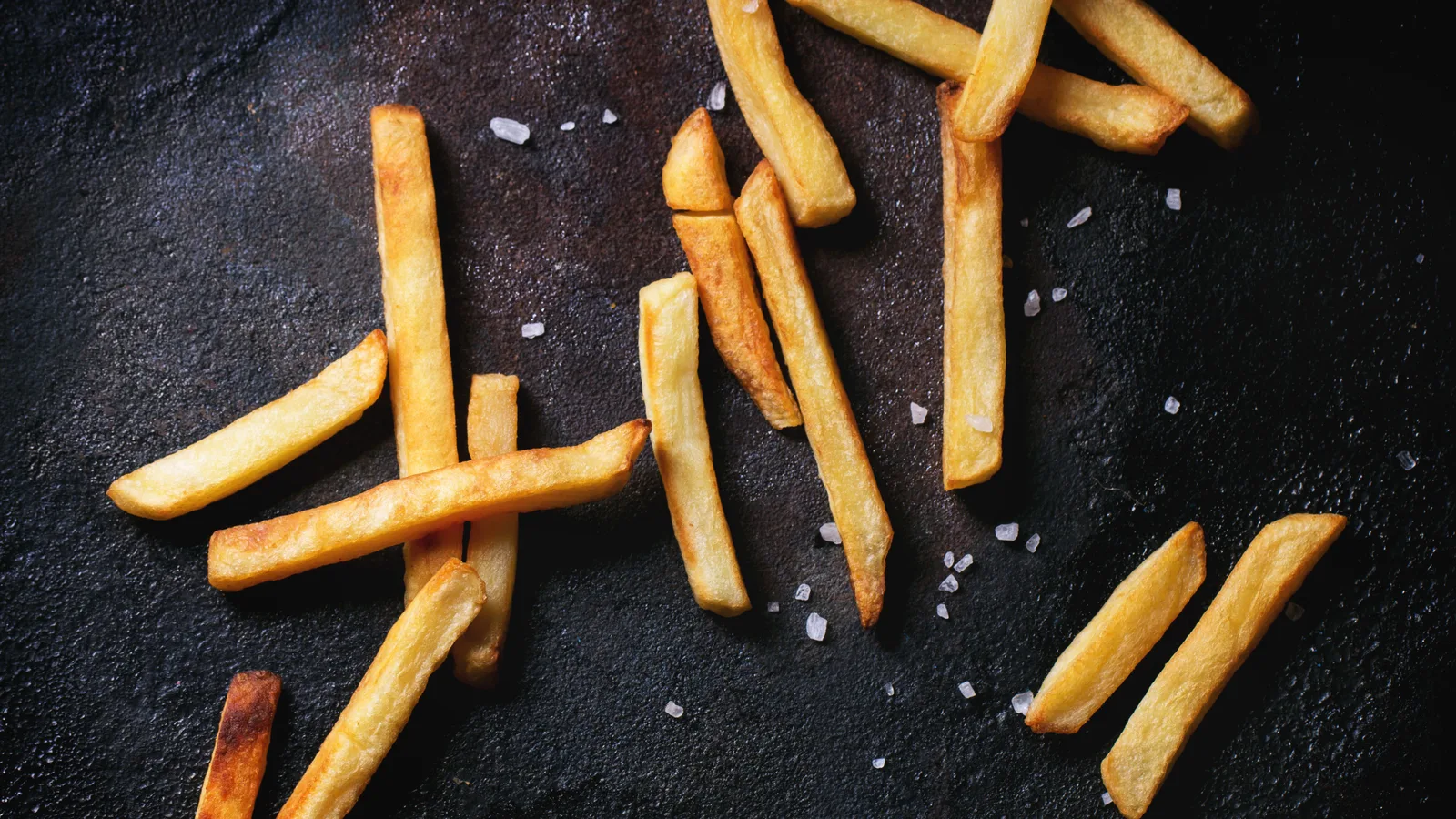
Underneath, they all work on the same principle: a heating element and a fan drive very hot air around the food. That browns and crisps the outside while the inside cooks in its own moisture. It is why chips, chicken wings, halloumi, sausages and roast vegetables come out well, and why wet batters and big joints of meat are still better off in a conventional oven.
Who it is for: households of two or more who cook chips, wings and traybake-style dinners several times a week and want them done faster than a full-size oven will manage. It is also a good fit if you have a small kitchen with a slow or unreliable oven, or if you want one appliance that air fries, roasts, bakes and reheats.
Who it is not for: anyone who mainly reheats leftovers for one, or who genuinely has no worktop space to spare.
Our verdict
Strengths and weaknesses
What it does well
- Fast, even browning on chips, wings and vegetables thanks to strong fan-forced heat
- Dual-zone models let you cook two foods on separate times and temperatures, then finish together
- Useful beyond frying: roasting, baking, reheating and dehydrating on many models
- Controls are usually straightforward, with clear presets and a countdown timer
- Baskets and crisper plates lift out easily, and many are dishwasher-safe
Where it falls short
- Bulky on the worktop — dual-zone and oven-style models need real clearance around them
- The fan is audible throughout cooking, which matters in an open-plan kitchen
- Non-stick coatings can scratch if you use metal tongs or scourers
- Premium models cost noticeably more than basic basket fryers with similar capacity
- Wet batters, whole chickens and anything saucy need a different appliance
How it scores on the things that matter
- Crisping and roasting
- 4.5/5
The fast, powerful fan is the main reason to buy: chips, wings and veg come out properly browned rather than pale.
- Ease of use
- 4.5/5
Presets and a clear timer do most of the thinking; the manual is worth a skim for time and temperature guidance.
- Cleaning
- 3.5/5
Lift-out baskets help, but corners and the crisper plate collect grease and the coating needs gentle handling.
- Capacity against footprint
- 4.0/5
Generous for the size on single-drawer models; dual-zone versions earn their space but dominate the worktop.
- Build quality and noise
- 3.5/5
Solid feel and a sturdy drawer action, offset by a fan note that runs for the whole cooking time.
- Value for money
- 4.0/5
Not cheap, but strong when you use it several times a week instead of heating a full oven.
Cooking performance: where it shines and where it doesn't
The strengths are all about dry heat and movement. Anything you want crisp and browned — frozen chips, potato wedges, chicken wings, cauliflower, halloumi, sausages, salmon fillets — suits this style of cooking, and the results arrive faster than in a fan oven because the cavity is small and the air is close to the food.
Where it struggles is with volume and moisture. Fill a drawer past the maximum line and the air cannot circulate, so chips steam instead of crisping and bakes brown unevenly. Wet batter will slide off a wire rack, and a large joint of meat will brown outside before it is cooked through. For those jobs, use the oven or a hob.
The practical rule is to cook in batches you can spread in a single layer, shake the drawer once or twice, and use a little oil rather than a lot — a teaspoon or two is enough to help browning and stop sticking.
Capacity, footprint and fitting it into your kitchen
Capacity is the specification people under-buy most often. As a rough guide, a single-drawer Ninja in the region of 4 to 5.5 litres is comfortable for two people, while dual-zone machines in the 7.6-litre class are aimed at families. Oven-style models offer the most room but take up the most worktop.
Measure the space you have, then add clearance: these appliances vent hot air and need room at the back and above, so pushing one tight under a wall cupboard is a bad idea. If it is going under a cupboard, check the manual for the minimum gap. Also measure the height with the drawer open — a fully pulled-out basket sticks a long way out over the worktop.
- Cooking method
- Fan-forced hot air with a heating element above the basket
- Typical capacity
- Roughly 4–5.5 litres for single-drawer models, 7.6 litres and up for dual-zone versions
- Common functions
- Air fry, roast, bake, reheat and dehydrate on many models
- Controls
- Dial or digital touch panel, depending on the model
- Basket finish
- Non-stick coated; many drawers and crisper plates are dishwasher-safe — confirm per model
- Maximum temperature
- Varies by model, so check the specification sheet rather than assuming
Cleaning, noise and everyday upkeep
Cleaning is the part that decides whether an air fryer becomes a daily habit or a cupboard ornament. Lift-out drawers and removable crisper plates make it manageable, and on models where both are dishwasher-safe the job is close to painless. Grease does collect around the drawer rim and in the gap between the plate and the base, so a quick soak before washing saves scrubbing.
The fan runs for the whole cooking time and you will hear it — think of a loud extractor fan rather than a quiet oven. It is rarely a problem in a closed kitchen but noticeable in an open-plan living space, especially during a long roast.
Keep a soft sponge and a non-abrasive cloth for the coated parts and you will get far more life out of the non-stick surface.
Single drawer, dual zone or oven-style?
| What to weigh up | Single drawer | Dual zone | Oven-style |
|---|---|---|---|
| Best for | One or two people in a smaller kitchen | Families cooking two different foods at once | Batch cooking and full meals in one cavity |
| Worktop space | Smallest footprint of the three | Wider body, needs more clearance | Bulkiest — usually needs a permanent spot |
| Cleaning | One drawer, one plate | Two drawers, but flavours stay separate | Trays and racks, so more surfaces |
| Learning curve | Simplest to run | Sync and match settings take a little practice | More functions and modes to learn |
| Cost | Usually the cheapest entry point | Mid to upper end of the range | Typically the most expensive format |
If you are unsure, single-drawer models are the sensible starting point: they are cheaper, easier to store and do the core job well. Go dual zone only if you regularly cook a main and a side that need different times and temperatures — that is the scenario where the extra width genuinely pays for itself.
Who should buy one, and who should not
Buy one if your weekly cooking looks like chips, wings, salmon, sausages, roasted vegetables and quick traybake dinners, and you want them done in a fraction of the time a full oven takes to preheat and run. The case is strongest for households of three or more, or for anyone whose main oven is slow, small or expensive to run for a single tray.
Think twice if you live alone and mostly reheat, because a basic basket fryer does that for a lot less money and space. Think twice as well if your bench is already crowded, or if you expect it to replace an oven entirely — it will not handle a Sunday roast, a large casserole or anything with a lot of liquid.
Buying advice before you order
-
01 /
Measure the gap, not just the appliance
Note the width, depth and height you can spare, then check the clearance the manual asks for at the back and above. Add the space needed with the drawer fully open.
-
02 /
Match capacity to the number of people you actually cook for
A drawer that is too small forces you into batches, which defeats the speed advantage. If you regularly cook for four, aim for a dual-zone or a large single basket.
-
03 /
Decide honestly whether you need two drawers
Dual zone is the standout feature in the range, but it only earns its worktop space if you cook two components with different times and temperatures.
-
04 /
Check what can go in the dishwasher
Drawer and crisper plate dishwasher-safety varies between models. If you hate hand-washing, this is worth more than an extra preset.
-
05 /
Buy from a retailer with a clear returns policy
Size and noise are the two things people most often regret. Check the return window and the warranty offered at the point of sale before you commit.
Frequently asked questions
Do you need oil to cook in a Ninja air fryer?
Not much. Most foods need a teaspoon or two of oil, or none at all if they are already fatty such as wings or sausages. A light coating helps browning and stops leaner foods sticking.
Can the drawers go in the dishwasher?
On many models the drawer and crisper plate are dishwasher-safe, but it varies by model and some manuals recommend hand-washing to protect the coating. Check the specific model's manual before assuming.
Is it cheaper to run than a full oven?
It depends on the wattage of the air fryer and how long you run it. A small cavity heats up faster and often cooks quicker than a large oven, but for long bakes or big batches the oven is usually the better choice.
How is a Ninja air fryer different from a Ninja Foodi?
Foodi is Ninja's multi-cooker range, where several cooking methods including pressure cooking sit in one pot. Air fryer models are dedicated fan-assisted cookers with drawers or an oven-style cavity.
Do you need to preheat it?
Many models recommend a short preheat for the best results, and some have a preheat setting built in. Follow the guidance for your model, and add a few minutes if you are cooking from frozen.