Delonghi vs Sage Coffee Machines: Which Should You Buy?
Delonghi or Sage? We compare espresso control, milk frothing, ease of use and day-to-day upkeep to name an overall winner for UK kitchens.
The short answer
That is the whole argument in a sentence: Sage wins on the coffee, Delonghi wins on the faff factor. Which one is right for you depends on whether you enjoy the process or simply want the drink.
A Sage machine asks something of you. You grind, you dose, you tamp, you watch the pour and adjust. Get it right and the result is closer to a good café than anything a fully automatic machine produces. Get it wrong and you will know about it.
A Delonghi bean-to-cup does the thinking. You choose a drink, it grinds and brews, and on the milk models it froths too. The ceiling is lower, but so is the floor, and most households never miss the extra control.
Two brands, two different ideas of home coffee
Delonghi is the Italian appliance giant, and coffee is one division of a very large business. That shows in the range: it runs from inexpensive manual machines you operate by hand right up to fully automatic bean-to-cup units with milk carafes, colour displays and a dozen drink presets. The centre of gravity is convenience and wide appeal.
Sage is the name under which Australia's Breville sells its kitchen electronics in the UK and Europe. Its coffee range is narrower and more purposeful, built around espresso: machines with integrated grinders, machines with steam wands, standalone grinders, and a following among people who like to weigh their beans.
Neither approach is wrong. But it explains almost every difference further down this page, from how the milk is handled to how much cleaning you sign up for.
Delonghi vs Sage side by side
| What matters | Delonghi | Sage coffee machine |
|---|---|---|
| Range in one line | Manual machines up to fully automatic bean-to-cup | Manual and semi-automatic espresso, plus standalone grinders |
| The typical owner | Wants a good milky coffee with the least possible effort | Wants to grind, dose and steam much as a café does |
| Grinder | Built into the bean-to-cup models; the cheapest manuals need a separate one | Built into several popular espresso models; otherwise bought separately |
| Milk | Automatic milk carafes on the bean-to-cup range, steam wands on manuals | Steam wands on most models, with automated frothing on some |
| Learning curve | Minutes on a bean-to-cup: choose a drink and press go | Days or weeks while you learn to dial in a shot |
| Control over the shot | Limited on automatics, more meaningful on the La Specialista range | High: grind, dose, tamp and yield are all yours to set |
| Worktop space | Bean-to-cup bodies are wide and deep, so measure first | Compact without a grinder; taller and deeper with one |
| Routine cleaning | Automatic rinse cycles and descale prompts on the automatics | Daily flushing and regular group-head cleaning are part of the deal |
| Best suited to | Shared kitchens and milk-heavy drinkers | One or two people who mostly drink espresso and flat whites |
Espresso: grinders, control and the learning curve
This is where Sage earns its reputation. The brand's espresso machines are built around the variables that actually change how a shot tastes: how fine the grind is, how much coffee goes in the basket, how hard you tamp and when you stop the pour. Several models put the grinder directly above the group head, which saves a worktop appliance and a step in the morning routine.
Delonghi does the same thing in its own way. The manual machines, from the slim Dedica upwards, are simple and forgiving, and typically rely on a separate grinder or pre-ground coffee. The La Specialista range adds an integrated grinder and more hand-holding for beginners, so you get some of the control of a Sage without quite the same homework.
The honest difference is who the machine is for. Sage assumes you will taste a shot, notice it ran fast, and grind finer tomorrow. Delonghi assumes you would rather it just worked.
Milk: automatic carafes versus a steam wand
If your coffee is really a milk drink with some coffee in it, Delonghi has the easier answer. The bean-to-cup models with milk carafes froth and dispense automatically, and you can set the texture for a latte one minute and a cappuccino the next. Clean-up is handled by a rinse cycle, though the carafe itself still needs regular washing.
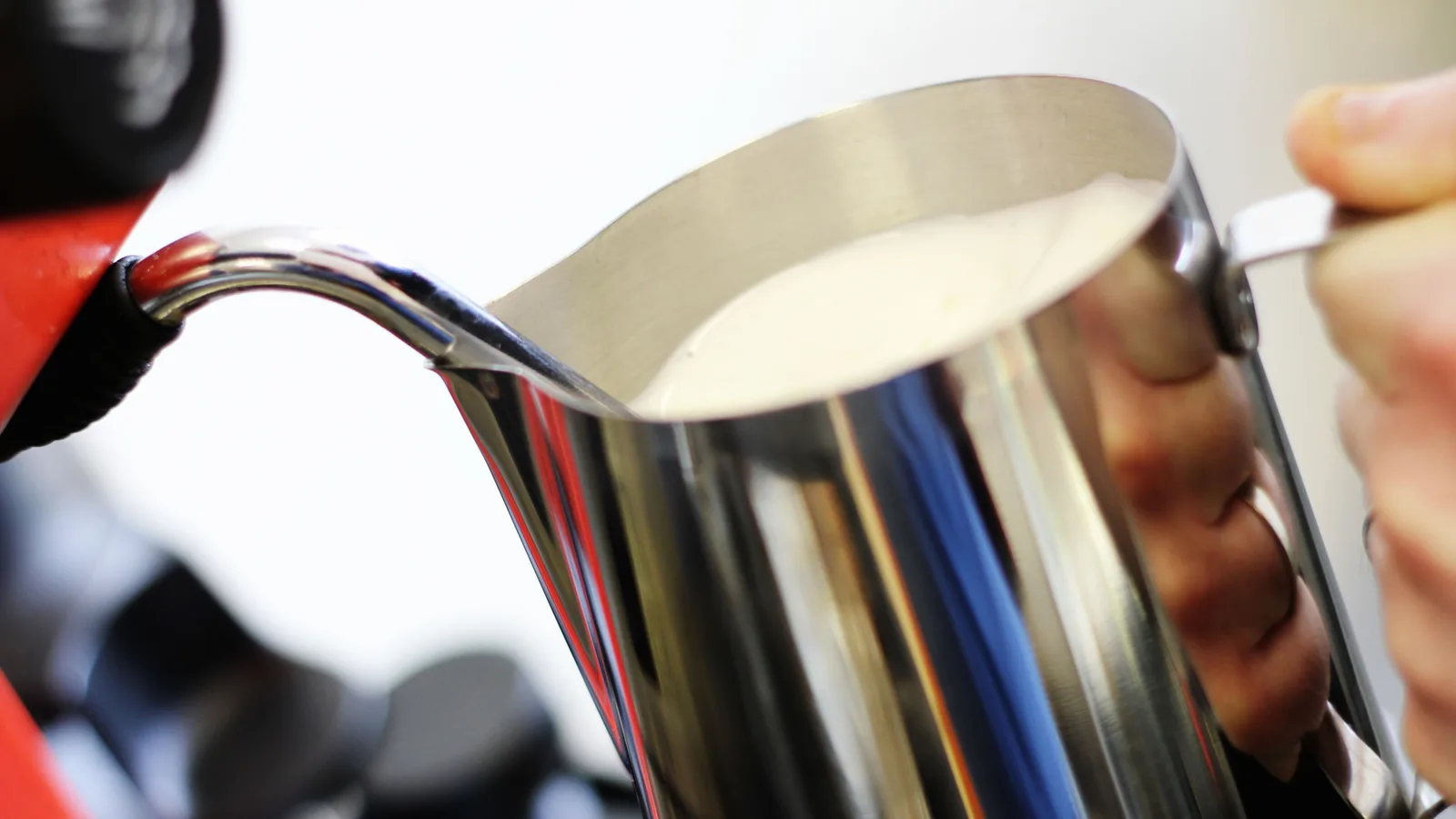
Sage hands you a steam wand. That means practice: jug angle, air introduction, the point where you stop stretching and start spinning. Once it clicks you get better microfoam than most automatic systems manage, and you can texture small quantities for a single flat white. Until it clicks, you get hot milk with bubbles the size of peas.
Some Sage models automate the steaming to shorten that learning curve, and Delonghi's manual machines use a wand too, so this is a model-by-model question as much as a brand one.
Strengths and weaknesses
Delonghi strengths
- Bean-to-cup models make milky drinks at the press of a button
- Very wide range, so there is a machine for almost any budget
- Automated rinsing and clear descale prompts on the automatics
- Plenty of UK stockists, service options and spares
Delonghi weaknesses
- Automatic models leave you little say over the shot itself
- Manual models often need a grinder bought separately
- Bean-to-cup bodies take up serious worktop space
Sage strengths
- Grinder and machine combined on several popular models
- Genuine control over grind, dose and extraction
- Reassuring, solid feel across the espresso range
- A large pool of shared settings and recipes to borrow from
Sage weaknesses
- Steep learning curve if you have never made espresso
- Daily flushing and regular deep cleaning are unavoidable
- Manual steaming takes practice before the milk is right
- Ambition grows with the range, and so does the outlay
Upkeep, consumables and long-term ownership
Both brands need descaling, and how often depends far more on your water than on the badge. In a hard-water area you will be doing it noticeably more often, so a water filter or filtered water is money well spent on either machine.
A Delonghi bean-to-cup is low-effort but not no-effort: the brew group on many models lifts out for rinsing, the milk carafe needs washing, and the machine will prompt you when it wants attention. An automatic that is never cleaned is a smelly automatic.
A Sage espresso machine asks for a little every day: flush the group head, empty and rinse the drip tray, knock out the puck. Weekly, you will want to clean the group head properly and backflush if the model supports it. It is perhaps five minutes a day, but it is five minutes you cannot skip.
Both brands sell their own descalers and cleaning products, and using the right one matters more than using a lot of it.
Who should choose Delonghi
Buy Delonghi if any of these sound like you:
- You drink mostly lattes and cappuccinos. The automatic milk systems are genuinely convenient, and the texture is consistent from the first cup of the day.
- More than one person uses the machine. A bean-to-cup with presets means nobody has to learn anything.
- You want one appliance, not three. Grinder, brewer and frother in a single body, at the cost of worktop space.
- You want to spend as little as possible on a first machine. The manual end of the range is a low-risk way in, and you can add a grinder later.
- You are buying for a household that will not weigh beans. Be realistic about who is actually making the coffee.
Who should choose a Sage coffee machine
Buy Sage if these ring truer:
- You already care how your espresso tastes. If you have opinions about a shot running long, you will use the control.
- You want a grinder and machine that were designed together. It removes a variable and a plug socket.
- You mostly drink espresso, macchiato or a single flat white. Small volumes are where a hand-steamed jug beats an automatic carafe.
- You are happy to learn. Give it a fortnight of deliberate practice and the results pull clearly ahead.
- You want a machine you can still be using, and servicing, in several years. The espresso range is built to be adjusted, cleaned and maintained rather than sealed shut.
Final verdict
Sage wins this comparison, but by a margin that depends entirely on the drinker. For espresso, flat whites and anyone who wants to understand what they are tasting, a Sage machine with a built-in grinder is the more rewarding buy and the one you are less likely to outgrow.
Delonghi takes the prize for the far larger group of households who want a good coffee before work without a routine. If the machine is going to be used by several people, or the milk is the point, a bean-to-cup Delonghi will be used more often and resented less.
So: choose Sage for the coffee, choose Delonghi for the convenience, and be honest about which of those you will still care about in six months.
Frequently asked questions
Is Sage a British brand?
No. Sage Appliances is the name under which the Australian company Breville sells its coffee machines and kitchen electronics in the UK and Europe.
Do all Delonghi coffee machines have a grinder?
No. The bean-to-cup models grind on demand, but the manual machines, including the Dedica range, need pre-ground coffee or a separate grinder.
Can I use pre-ground coffee in a Sage espresso machine?
Yes on the models that have a grinder. You can spoon pre-ground coffee into the portafilter instead of grinding, though the shot will usually be less lively than with freshly ground beans.
Which is better for a small kitchen?
Usually Sage, if you pick a model without a built-in grinder. Delonghi's bean-to-cup machines are wide and deep, so measure your worktop and any overhead cupboards before committing.
Do either of them need descaling?
Both do. How often depends on your water hardness rather than the brand, and both manufacturers sell their own descaler, which is the safest choice while the machine is under warranty.